One of the most fascinating aspects of being a whiskey enthusiast is how dramatically our tastes and preferences can change from one day to the next. The bourbon that seemed absolutely perfect yesterday might not be what we're craving today.
Sometimes, the best whiskey in our collection isn't necessarily the most expensive, the oldest, or even the highest-rated bottle. It's simply the whiskey that matches our mood.

I frequently find myself standing in front of my whiskey collection, surveying bottles of bourbon, rye, Scotch, and Irish whiskey, trying to decide what I'm in the mood to drink. Some days, I want something rich, decadent, and sweet, with layers of brown sugar, caramel, vanilla custard, and crème brûlée. Other days, I want exactly the opposite. Maybe I'm craving something dry, oak-driven, and relatively straightforward. Perhaps I don't want anything finished in brandy, port, sherry, or other wine casks. I just want a traditional whiskey with good balance and mature oak character. And then there are evenings when I initially decide on an Irish whiskey, only to change my mind five minutes later and reach for a peated Scotch.
That's one of the things I enjoy most about whiskey. There's no single flavor profile that satisfies me every time. What I'm looking for can change from day to day, and sometimes even from one pour to the next.
Why Our Whiskey Preferences Change From Day to Day
Anyone who has spent considerable time exploring whiskey knows that personal taste isn't necessarily static. Our preferences evolve over months and years as we experience different distilleries, mash bills, maturation techniques, and flavor profiles. However, what I find equally interesting is how much those preferences can fluctuate within a single week or even a single evening.
One night, I might be craving a rich, heavily layered bourbon with pronounced caramel, brown sugar, and baking spices. The following evening, those same characteristics might sound a little overwhelming. Instead, I might want a mature, oak-forward bourbon with restrained sweetness, a drier finish, and just enough spice to keep things interesting. This doesn't mean my opinion of the sweeter bourbon has changed. It simply means my palate is looking for something different. And when you think about it, this is perfectly natural.
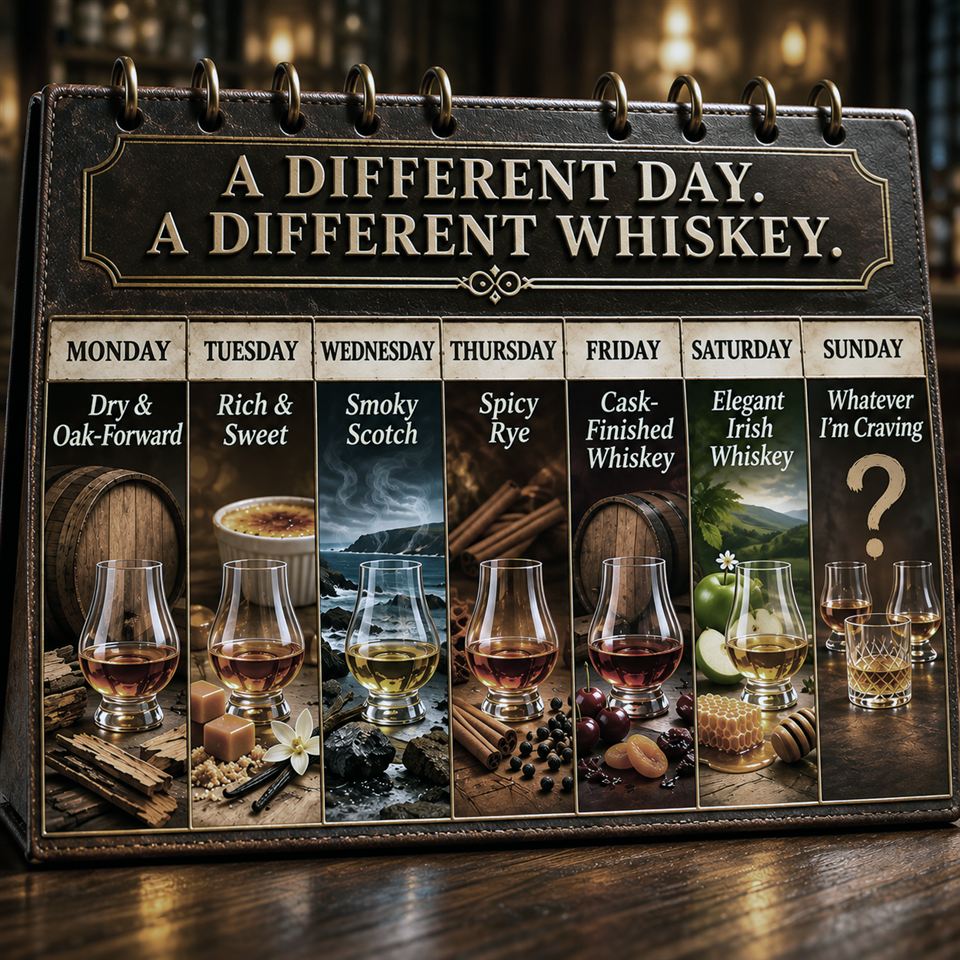
Whiskey Is Like Food: We Don't Want the Same Thing for Every Meal
One of the easiest ways to understand our changing whiskey preferences is to compare them to our relationship with food. Think about how differently we approach meals throughout the week. One evening, we might crave a thick, juicy steak. The following day, perhaps we're in the mood for seafood, Italian food, or something spicy. Another evening, we might want nothing more than a simple hamburger.
We could have an absolutely fantastic steak on Monday, perhaps one of the best we've ever eaten. But does that mean we want to eat that same steak for breakfast, lunch, and dinner every day for the rest of the week? Of course not. Even our favorite foods lose some of their appeal when we eat them repeatedly without variety. The same principle applies to whiskey. I might have an exceptional bourbon on Friday evening, one that delivers everything I love about mature Kentucky whiskey. But by Saturday, I might be craving something completely different. Perhaps I want the smoke and salinity of an Islay Scotch. Maybe a spicy rye sounds more appealing. Or perhaps I'm in the mood for the elegance of a mature Irish whiskey.
Just because something is our favorite doesn't mean it's what we want every single time. And just as we don't judge every meal by how closely it resembles our favorite steak, we shouldn't judge every whiskey by how closely it resembles our favorite bourbon. Different foods satisfy different cravings. Different whiskeys do exactly the same thing.
That's why I find it interesting when someone asks me to name my single favorite whiskey. I certainly have favorites, but the bottle I consider the best in my collection isn't necessarily the bottle I most want to drink tonight.
Sweet Bourbon vs. Dry Bourbon: Understanding Your Changing Whiskey Palate
One of the most common decisions I make when selecting a whiskey is whether I'm in the mood for something sweet or dry. Both styles can be exceptionally enjoyable, but they satisfy very different cravings.
When I'm Craving a Rich, Sweet Bourbon
I have a tremendous appreciation for well-crafted bourbons that deliver rich flavors of brown sugar, caramelized sugar, vanilla, seasoned oak, and crème brûlée. Those flavors are among my favorites, especially when they're accompanied by a substantial mouthfeel and enough spice or oak to provide balance.
For example, Belle Meade 10 Year Cask Strength Single Barrel Bourbon is an excellent illustration of the kind of whiskey I enjoy when I'm craving something particularly rich and complex. Its layers of cherry cola, dark caramel, molasses, seasoned oak, and baking spices create a wonderfully satisfying experience. It's the type of bourbon that reminds me why I became so passionate about whiskey in the first place.
Likewise, Four Gate Kelvin Collaboration II, a 12-year-old Kentucky bourbon finished in cognac and rum casks, is among my personal favorites. Its combination of mature bourbon characteristics and complementary finishing influences demonstrates just how rewarding a carefully executed cask finish can be.
But even with whiskeys I consider exceptional, there are evenings when I'm simply not in the mood for that level of sweetness or richness. It's no different from enjoying a wonderful dessert. You might love crème brûlée, chocolate cake, or pecan pie, but that doesn't mean you're craving dessert every time you sit down to eat. Sometimes, you want something savory instead.
When I Want a Dry, Oak-Forward Bourbon
Other days, my preferences shift toward mature oak, restrained sweetness, traditional bourbon spices, and a relatively dry finish. There's something particularly satisfying about a whiskey that allows the underlying bourbon character to take center stage without excessive sweetness or pronounced finishing-cask influences. For example, on an evening when I'm looking for something relatively dry and oak-driven, I might reach for Benjamin Prichard's Double Barreled Bourbon rather than one of my richer, sweeter expressions. However, I make an important distinction between pleasantly dry, mature oak and excessively bitter, charred wood.
I enjoy seasoned oak that contributes depth, structure, and complexity. What I generally don't enjoy is an aggressive char influence that overwhelms the whiskey with bitterness or unpleasant burnt-wood characteristics. A good dry bourbon should still offer balance. The oak should complement the vanilla, caramel, grain, and spice rather than completely dominate them. Sometimes, that's exactly what my palate wants.
Bourbon, Scotch, Rye, or Irish Whiskey? Choosing Whiskey Based on Your Mood

My changing preferences aren't limited to sweet versus dry bourbon. Sometimes, I find myself changing whiskey categories entirely.
I might initially decide that an Irish whiskey sounds appealing. A few minutes later, I may reconsider and reach for a Scotch. On another evening, a spicy rye whiskey might be exactly what I'm craving. Each category offers a different range of aromas, flavors, textures, and finishes, making it possible to match a whiskey to almost any mood.
When I'm in the Mood for Irish Whiskey
When I want an Irish whiskey, I'm often drawn toward mature, sophisticated expressions that offer complexity without becoming excessively aggressive. Whiskeys such as Midleton Very Rare Dair Ghaelach and J.J. Corry The Flintlock 21 Year represent the type of Irish whiskey experiences I particularly appreciate. I also enjoy Redbreast, although having several expressions in my collection doesn't mean they're necessarily what I reach for most frequently.
That's another interesting aspect of whiskey collecting. You can respect a whiskey's craftsmanship and quality without constantly being in the mood to drink it. And sometimes, even when I initially think I want Irish whiskey, I change my mind before I ever pour a glass.
When I Want a Peated or Complex Scotch Whisky
Then there are evenings when nothing sounds better than a good Scotch.
Sometimes I want the maritime qualities of an Islay whisky, with its distinctive combination of peat smoke, salinity, citrus, and medicinal notes. Other times, I want something with a more pronounced sherry-cask influence.
Consider the differences between Ardbeg expressions such as Corryvreckan and Uigeadail, or the more restrained 15-year-old Ardbeg expressions I've explored. Each offers a different balance of peat, sweetness, cask influence, and intensity.
There are days when I want a powerful, intensely flavored Scotch that demands my full attention. On other occasions, I'd rather have something lighter, more refreshing, and easier to sip. Neither preference is inherently better. They're simply different experiences. It's similar to deciding whether you want a heavily seasoned meal or something lighter and more delicate. Both can be wonderful, but your appetite determines which sounds more appealing.
When Rye Whiskey Is the Perfect Choice
Rye whiskey introduces another dimension to the decision. When I'm craving baking spices, pepper, cinnamon, and a more assertive flavor profile, rye can be particularly satisfying. Interestingly, I've also discovered that a well-executed cask finish can occasionally change my opinion about an ingredient or maturation technique.
I've generally been less enthusiastic about Amburana wood finishes, particularly when their distinctive cinnamon-heavy character becomes overwhelming.
However, a recent experience with Dark Arts 8 Year Rye finished in maple syrup barrels with toasted Amburana staves demonstrated how the right combination of flavors can create something surprisingly enjoyable. Its maple sweetness, pastry-like characteristics, and rye spice worked together in a way I hadn't necessarily expected. That experience reinforced something I've learned repeatedly: never assume that disliking one whiskey characteristic means you'll dislike every expression featuring it. Context, balance, and execution matter tremendously.
How Whiskey Cask Finishes Influence Flavor and Personal Preference
Over the years, I've developed a particular appreciation for whiskeys finished in carefully selected secondary casks. Cognac, rum, port, sherry, Madeira, and other finishing barrels can introduce fascinating layers of complexity. However, I've also become increasingly particular about how those finishing influences interact with the underlying whiskey. My preference is generally for a cask finish that complements the core distillate rather than overwhelms it.
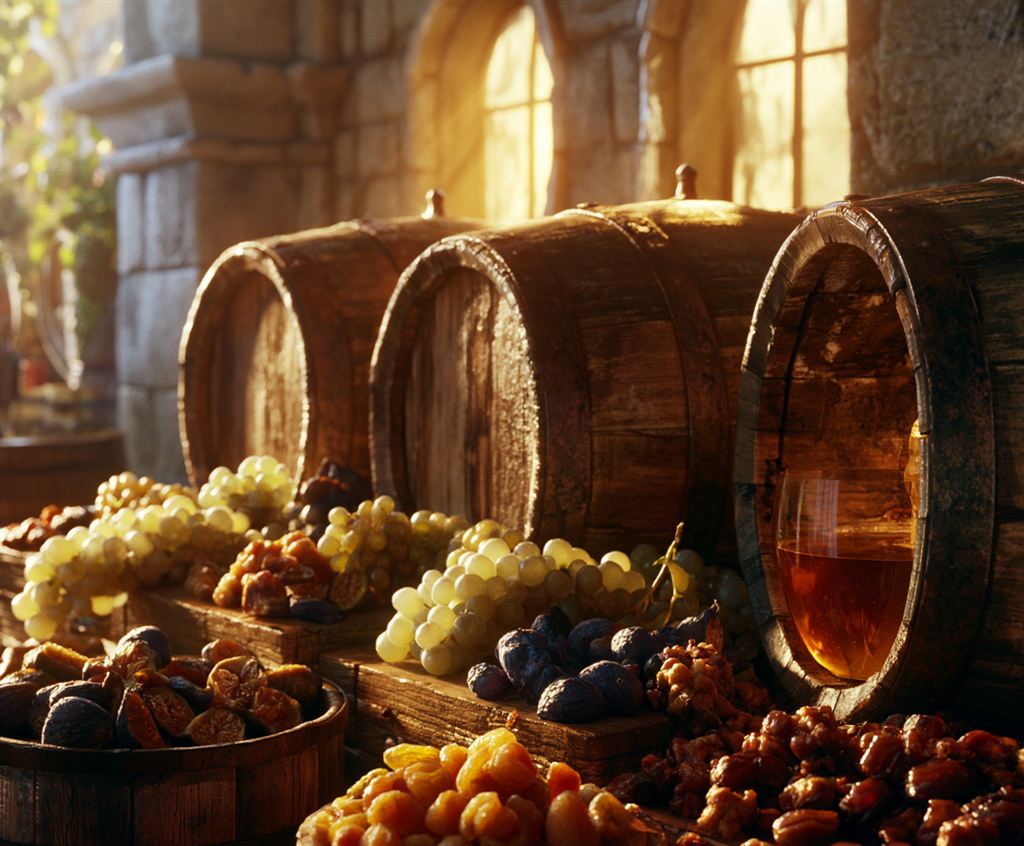
Barrell Craft Spirits is one producer whose approach to blending and finishing I've often appreciated for this reason. When done well, the additional cask influence can enhance the whiskey's character while allowing its foundational qualities to remain recognizable.
A finishing cask should contribute something meaningful to the experience. But more finishing influence doesn't automatically mean a better whiskey. There are times when the added sweetness, fruit, or wood characteristics can become excessive, masking the qualities that made the original whiskey appealing. And there are days when I don't want a secondary cask finish influencing my drinking experience at all. I just want bourbon to taste like bourbon.
It's another example of how our preferences change. Sometimes, I want a whiskey with all the complexity of an elaborate, multi-course dinner. Other times, I want the whiskey equivalent of a perfectly grilled steak with nothing more than salt and pepper.
There's a place for both.
Why Expensive, Rare, and Highly Rated Whiskeys Aren't Always the Best Choice
One of the more interesting realizations I've had as a whiskey collector is that quality and personal enjoyment aren't always perfectly aligned. A whiskey can be exceptionally well made, highly rated, rare, or expensive and still not be what I want to drink on a particular evening.
I've tasted some extraordinary bourbons, including limited releases and mature single barrels that I consider among the best whiskeys in my collection. But having access to those bottles doesn't mean I automatically reach for them. Sometimes, a more approachable whiskey offers a more satisfying experience simply because its flavor profile matches my mood. That's why I believe whiskey ratings should be viewed as useful references rather than absolute measures of enjoyment.
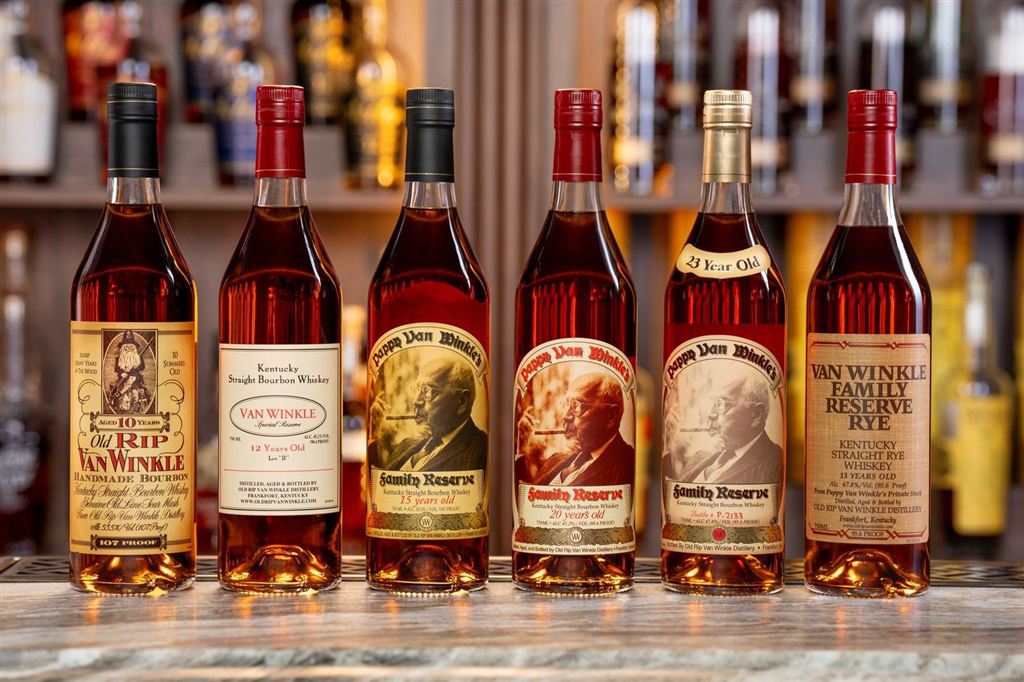
A rating can help communicate a whiskey's perceived quality, balance, complexity, and overall performance. However, it can't tell you whether you're going to be in the mood for that particular whiskey tonight. A 95-point bourbon might be exceptional, but if you're craving a dry, oak-forward pour and that bourbon delivers intense sweetness, it might not be your ideal choice at that moment.
Conversely, a whiskey you ordinarily consider less complex might provide exactly the experience you're looking for. Think about food again. A world-class restaurant might serve an extraordinary seven-course tasting menu, but there are evenings when you'd rather have a really good pizza. That doesn't mean the pizza is objectively better than the seven-course meal. It simply means the pizza is what you want.
The best whiskey isn't always the highest-rated whiskey. Sometimes, it's simply the right whiskey at the right time.
How Mood, Food, Environment, and Palate Fatigue Affect Whiskey Tasting
Our perception of whiskey isn't determined exclusively by what's inside the bottle. Several factors can influence how we experience its aromas, flavors, mouthfeel, and finish.

What We've Eaten
A meal rich in sugar, salt, fat, or spice can influence how we perceive the next whiskey we drink. Certain flavors may seem more pronounced or subdued depending on what we've recently consumed.
Our Environment
Temperature, background aromas, glassware, and even the setting in which we're drinking can affect the tasting experience.
Palate Fatigue
Sampling multiple high-proof or intensely flavored whiskeys can temporarily reduce our ability to appreciate more delicate characteristics. This is one reason I find it useful to approach tastings thoughtfully rather than rushing through several pours.
Our Expectations
If we're anticipating a rich, dessert-like bourbon, a particularly dry expression may initially seem underwhelming—even if it's beautifully balanced.
Our Current Preferences
Sometimes, there's no complicated explanation. We simply feel like drinking something different.
It's also worth distinguishing between changes in preference and changes in sensory perception. Our mood may influence what we want, while factors such as food, aromas, and palate fatigue can affect what we actually taste.
Recognizing those differences can make us more thoughtful whiskey enthusiasts.
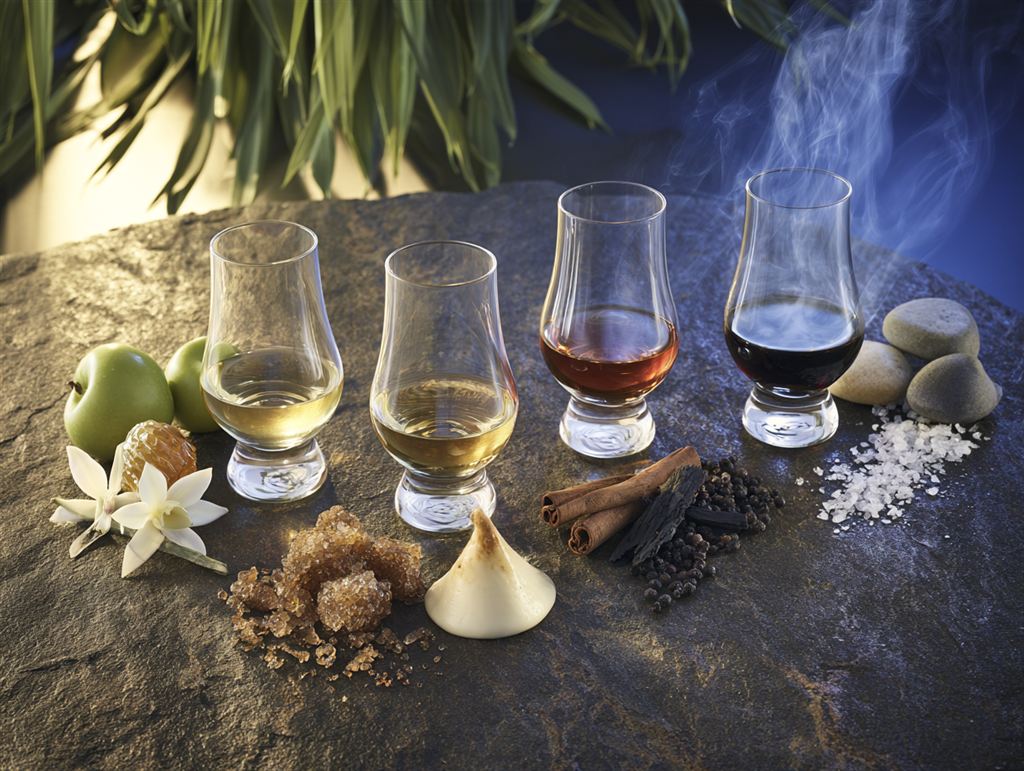
Why Building a Diverse Whiskey Collection Makes Drinking More Enjoyable
For me, one of the greatest benefits of maintaining a diverse whiskey collection is having options. A collection doesn't need to contain hundreds of bottles or expensive limited releases to provide variety. What matters is having whiskeys that offer genuinely different experiences.
A well-rounded collection might include a traditional Kentucky bourbon, a mature oak-forward single barrel, a sweeter wheated bourbon, a spicy rye, a sherried Scotch, a peated Islay whisky, and a quality Irish whiskey.
The goal isn't simply to accumulate bottles. It's to have enough variety to accommodate different preferences and occasions. Think of a well-stocked kitchen. Having a variety of ingredients allows you to prepare whatever sounds appealing that day. You wouldn't stock your kitchen with nothing but steak simply because steak happens to be your favorite food. A diverse whiskey collection serves much the same purpose. This is particularly important because even my favorite whiskeys aren't necessarily what I want every day.
I may love the deep caramel and seasoned oak characteristics of an exceptional cask-strength bourbon, but there are evenings when a more restrained expression is considerably more appealing. Likewise, I might spend half an hour enjoying the evolving aromas of an unusually complex whiskey on one occasion, while on another evening I simply want an uncomplicated pour that I can enjoy without dissecting every flavor. Both approaches have their place.
The Joy of Whiskey Tasting Is Discovering What You Enjoy Today
One of the reasons whiskey remains such an enjoyable hobby for me is that the experience never becomes completely predictable. Even after tasting countless expressions across different categories, I continue to discover new combinations of aromas and flavors.
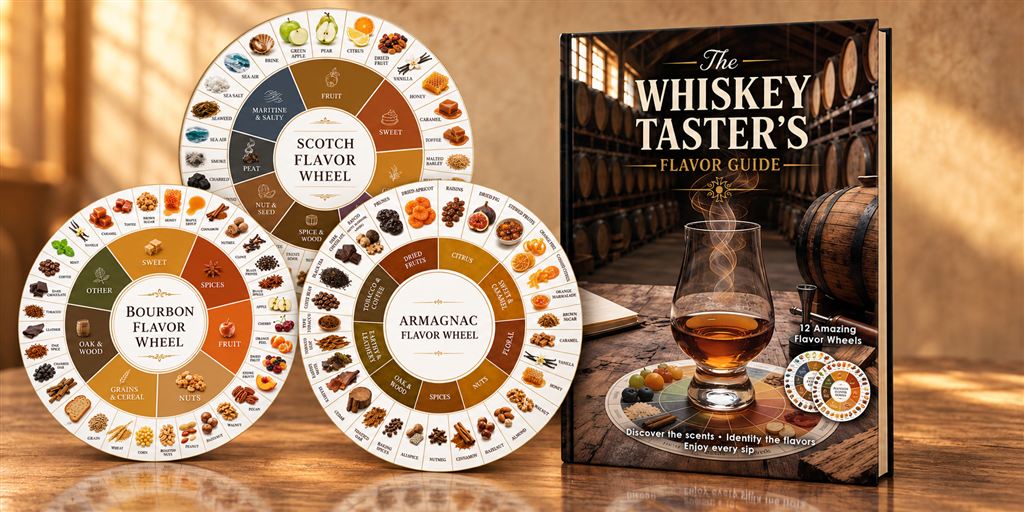
In fact, this constant exploration of different whiskey flavors is one of the reasons I wrote The Whiskey Taster’s Flavor Guide. With 12 whiskey flavor wheels and eight additional cask-finish wheels, the book helps enthusiasts identify and appreciate the aromas and flavors that make each whiskey unique. The more we understand these characteristics, the easier it becomes to recognize what our palate is craving on any given day.
Sometimes, a whiskey surprises me by delivering characteristics I hadn't anticipated. Other times, a bottle I've enjoyed for years suddenly seems particularly appealing because it matches my mood perfectly. I've also learned that I don't need to force myself to appreciate a whiskey simply because it's popular, expensive, or highly regarded.
Personal preference is an essential part of whiskey appreciation. The more whiskey I taste, the more I recognize that there isn't one universal flavor profile that defines excellence for every occasion.
Some days, I want a rich, sweet bourbon loaded with brown sugar, vanilla, and crème brûlée. Other days, I want the dark fruit and complexity of a carefully finished whiskey. Sometimes, I'm craving the smoke and salinity of an Islay Scotch or the elegant character of a mature Irish whiskey. And sometimes, I want something dry, oak-forward, balanced, and relatively straightforward.
The beauty of whiskey is that there's almost always an expression that fits whatever I'm craving.
Final Thoughts: Your Favorite Whiskey Isn't Always the Whiskey You Want Today
After years of exploring bourbon, rye, Scotch, Irish whiskey, and numerous cask-finished expressions, one thing has become increasingly clear to me. My favorite whiskey and the whiskey I want to drink today aren't necessarily the same thing. And why should they be?
We don't expect to eat our favorite meal three times a day, seven days a week. Even the most extraordinary food would eventually become monotonous without variety. Why should whiskey be any different? Our tastes change from day to day, from one occasion to another, and sometimes even from one pour to the next. That's part of what makes whiskey such a fascinating and rewarding hobby.
So, when someone asks me what my favorite whiskey is, perhaps the better question is: "What whiskey are you in the mood for today?" Because tomorrow, my answer might be completely different.
And that's half the fun of being a whiskey enthusiast.